
18.Apr.2023
In this article, we would like to guide people and institutions who want to make a new start in programming and other designs related to Artificial Intelligence.
The subject of Artificial Intelligence is, of course, a software business at its most basic, but it also interacts with different scientific and technical fields. Developers developing artificial intelligence applications for home, business and industrial areas also have to enter different scientific and technological disciplines. In short; This job is a team job.
Since software-programming languages are at the core of the business, we will give advice on this aspect of the subject.
Depending on the type of project planned to be implemented, the programming language we will use may also change. Some programming languages can come to the fore, especially due to the abundance of command-libraries for image and audio processing and easy coding.
Many programming languages can be used to develop artificial intelligence applications. Choosing the most appropriate language depends on your intended use, the characteristics of your project, and your personal preferences. However, some languages are particularly popular for developing AI applications.
Python: Python is the most widely used language for the development of artificial intelligence applications. It is easy to read, understand and easy to learn. Python includes a large number of libraries and tools, so it is best suited for artificial intelligence applications such as machine learning, natural language processing, data analysis.
R: R is a popular language for data analysis and statistical computing, and is also used for artificial intelligence applications. R includes a large library of statistics and supports many algorithms used for machine learning applications.
Java: Java is another popular language used to develop artificial intelligence applications. Because Java is an object-oriented language, it is easy to use in large projects and is designed for large-scale use of artificial intelligence applications.
C++: C++ is a popular language for AI applications that demand performance in terms of speed and memory management. It is often used for high performance applications and deep learning algorithms.
Julia: Although Julia is a relatively new language for developing artificial intelligence applications, it has become popular due to its fast performance and easy readability. Julia is used in areas such as big data analytics, machine learning, and scientific computing.
"Reinforcement Learning: An Introduction" by Richard S. Sutton and Andrew G. Barto
"Artificial Intelligence: A Modern Approach" by Stuart Russell and Peter Norvig
"Python Machine Learning" by Sebastian Raschka and Vahid Mirjalili
"Hands-On Machine Learning with Scikit-Learn and TensorFlow" by Aurélien Géron
"The Hundred-Page Machine Learning Book" by Andriy Burkov
"Machine Learning Yearning" by Andrew Ng
"Grokking Deep Learning" by Andrew Trask
"Neural Networks and Deep Learning: A Textbook" by Charu Aggarwal
"Data Science from Scratch: First Principles with Python" by Joel Grus
"The Deep Learning Revolution" by Terrence J. Sejnowski
"Data Science for Business" by Foster Provost and Tom Fawcett
"Hands-On Deep Learning for Images with TensorFlow" by Will Ballard
"Pattern Recognition and Machine Learning" by Christopher Bishop
"Applied Artificial Intelligence: A Handbook for Business Leaders" by Mariya Yao, Adelyn Zhou, and Marlene Jia
"Building Machine Learning Systems with Python" by Willi Richert and Luis Pedro Coelho
"Natural Language Processing with Python" by Steven Bird, Ewan Klein, and Edward Loper
"Probabilistic Robotics" by Sebastian Thrun, Wolfram Burgard, and Dieter Fox
"Hands-On Unsupervised Learning with Python" by Ankur A. Patel
"TensorFlow 2.0 Cookbook" by Antonio Gulli and Amita Kapoor
Related Article: Real-Time Face Analysis with TensorFlow.js: Structure, Usage and Application Areas
Developing Mobile Applications Compatible with MCU Systems
Explore the "Flutter and Dart Cookbook" for developing mobile applications compatible with MCU systems
24.10.2023
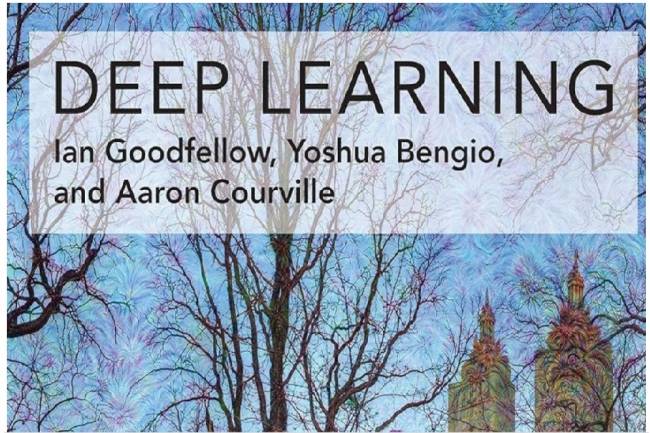
Deep Learning (Adaptive Computing and Machine Learning Series) - Illustrated Edition
Deep Learning: Adaptive Computing and Machine Learning Series" - The pinnacle of learning technologies.
07.11.2023

Flutter in Action First Edition
Master Flutter and Dart with 'Flutter in Action' by Eric Windmill. Build high-performance mobile apps for iOS and Android. Comprehensive guide with real-world insights
05.01.2024
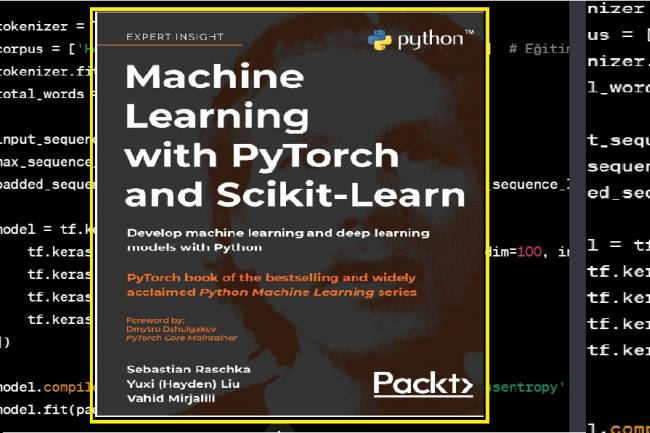
PyTorch and Scikit-Learn Guide Covering Machine and Deep Learning with Python
Master machine learning with PyTorch and Scikit-Learn. Comprehensive guide for Python developers. Learn theory, build models and stay up to date on the latest trends
20.01.2024
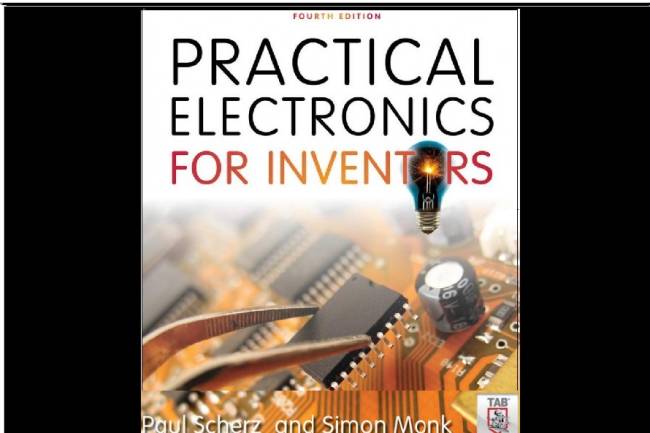
Practical Electronics for Inventors, Fourth Edition
Practical Electronics for Inventors, Fourth Edition, is a comprehensive resource designed for electronics students and enthusiasts. It offers step-by-step instructions, diagrams, and illustrations that range from the basics to advanced topics. You will find everything you need to enter the world of electronics, design circuits and bring your own projects to life.
13.08.2023

Book : Radio Frequency Modulation Made Easy
This book provides a comprehensive overview of various modulation techniques. Rich visual content is used to facilitate students' understanding.
15.08.2023
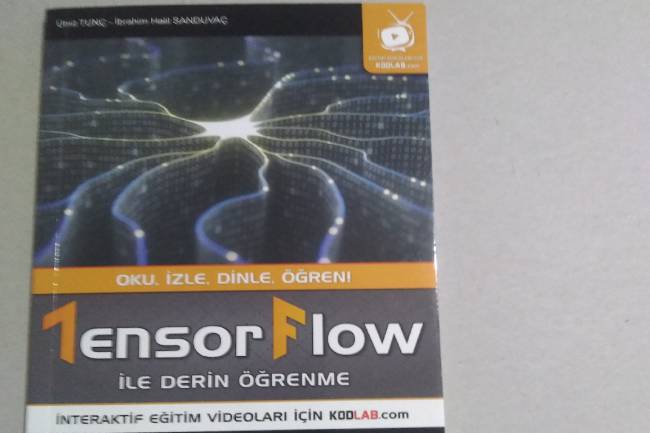
Deep Learning with Tensorflow
Deep Learning with Tensorflow examples, installation
13.05.2022