
20.Jan.2024
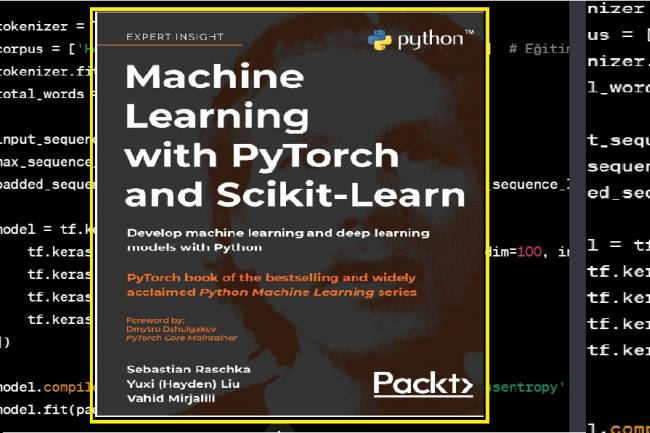
This comprehensive guide to “Machine Learning with PyTorch and Scikit-Learn,” is a powerful resource for Python developers and data scientists. It is designed for anyone who wants to understand and apply basic machine learning and deep learning techniques and keep up with the latest trends. Written by Sebastian Raschka, Yuxi (Hayden) Liu, Vahid Mirjalili, and Dmytro Dzhulgakov, this book focuses on teaching principles rather than simply teaching how to follow instructions, giving readers the ability to create their own models and applications.
Emphasizing the use of PyTorch, the book provides an easier and simpler way to learn and code machine learning. Understanding basic PyTorch components and building models using popular libraries such as PyTorch Lightning and PyTorch Geometric are the focuses of the book.
This resource is packed with clear explanations, visualizations, and examples on topics like training machine learning classifiers, building neural networks, transformers, and boosting algorithms on images, text, and more. It also covers advanced topics such as GANs, reinforcement learning, graphical neural networks, and large-scale transformers used for natural language processing.
This book is an indispensable resource for developers and data scientists who have Python fundamentals and want to get into machine learning and deep learning, or who want to deepen their knowledge in these areas. Readers are expected to have a good understanding of mathematics before starting, particularly a foundation in calculus and linear algebra.
Contents:
1. Giving Computers the Ability to Learn from Data
2. Training Simple Machine Learning Algorithms for Classification
3. Tour of Machine Learning Classifiers Using Scikit-Learn
4. Creating Good Training Datasets – Data Preprocessing
5. Compressing Data via Dimension Reduction
6. Learning Best Practices for Model Evaluation and Hyperparameter Tuning
7. Combining Different Models for Community Learning
8. Applying Machine Learning to Sentiment Analysis
9. Predicting Continuous Target Variables with Regression Analysis
10. Working with Unlabeled Data - Cluster Analysis
Developing Mobile Applications Compatible with MCU Systems
Explore the "Flutter and Dart Cookbook" for developing mobile applications compatible with MCU systems
24.10.2023
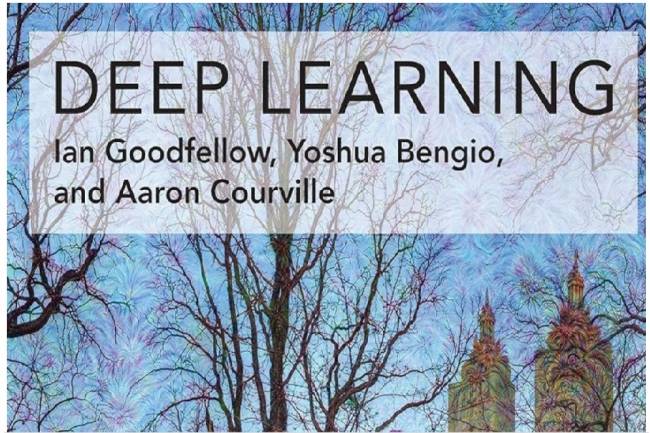
Deep Learning (Adaptive Computing and Machine Learning Series) - Illustrated Edition
Deep Learning: Adaptive Computing and Machine Learning Series" - The pinnacle of learning technologies.
07.11.2023

How Are Artificial Intelligence Applications Made?
Programming languages and resource books to learn how to develop artificial intelligence applications
18.04.2023

Flutter in Action First Edition
Master Flutter and Dart with 'Flutter in Action' by Eric Windmill. Build high-performance mobile apps for iOS and Android. Comprehensive guide with real-world insights
05.01.2024
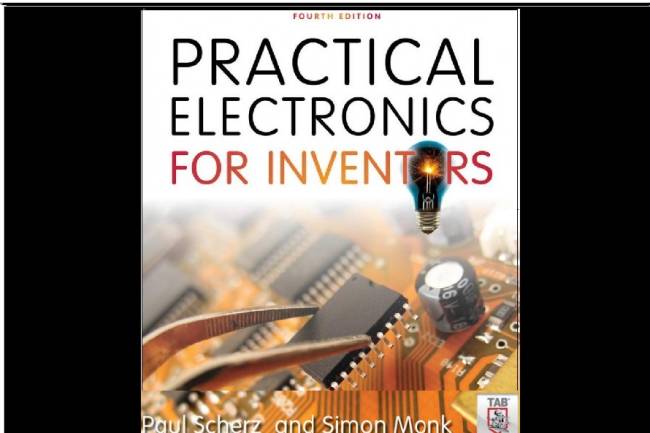
Practical Electronics for Inventors, Fourth Edition
Practical Electronics for Inventors, Fourth Edition, is a comprehensive resource designed for electronics students and enthusiasts. It offers step-by-step instructions, diagrams, and illustrations that range from the basics to advanced topics. You will find everything you need to enter the world of electronics, design circuits and bring your own projects to life.
13.08.2023

Book : Radio Frequency Modulation Made Easy
This book provides a comprehensive overview of various modulation techniques. Rich visual content is used to facilitate students' understanding.
15.08.2023
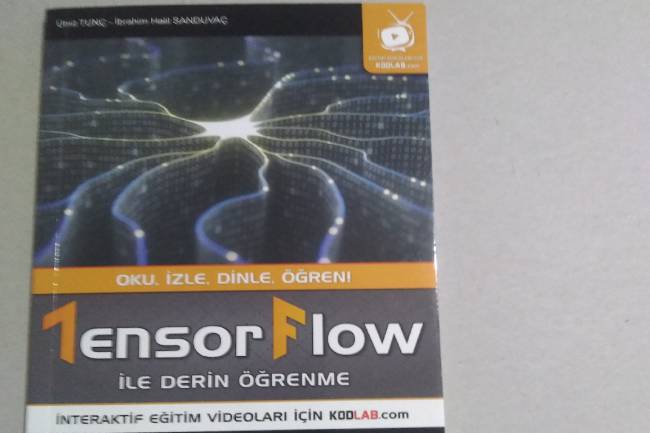
Deep Learning with Tensorflow
Deep Learning with Tensorflow examples, installation
13.05.2022