
07.Dec.2022
The rapid development of electronics and, of course, computer technology has brought new concepts to light. Developments in other branches of science and technology also contributed significantly to this speed and acceleration.
The interaction of science and technology branches has been and continues to be, mostly thanks to the development of electronic and software technologies. In the field of electronics, the rapid development of chip technology has opened the door to every new technological development, including the developments of electronics and computers in our daily life.
The most significant impact of electronic technology was manifested in the proliferation and cheapening of communication tools worldwide. Thanks to the means of communication, the acceleration of information sharing and therefore the increase in the contribution of knowledge-skill interactions to new knowledge and skills databases brought societies, countries and universities to a completely different global perspective.
Technological developments have added new technical standards and terms to our daily lives. Now, the global word “IoT” is one of them.
Based on “IoT(Intenet Of Things)”, it is a technical term. It is a software and electronic definition. Because an IoT component has both software and electronic circuits.
If we try to understand it simply, IoT is a physical thing. The universe that emerges by making the objects we use in our daily or business life measurable, observable and manageable is called IoT. Of course, in order for a physical object to become an IoT object, there must also be electronic and software components.
Sensors and transducers, microcontrollers, microprocessors, analog to digital converters, digital to analog converters, RF communication protocols (Wi-Fi, BlueTooth, Lora, other RF elements…), data storage, Cloud, web infrastructure... In our daily life, in business life In industrial environments, any object must be connected to these components in order to become an IoT object. But it is necessary to understand one thing exactly. The “object-thing” mentioned throughout this article can be a machine, a human, or a plant. If we look at it from this perspective, everything that our eye sees and does not see can be turned into an IoT object.
After describing the objects-things that can become IoT in this way, it is not difficult to imagine how big an IoT universe we can come across. And the first step of this great universe is the barrier of data processing and storage. The first step of the data processing process starts with the sensors; lastly, it comes down to artificial intelligence programs.
The size of the IoT universes, data storage-Cloud, the increase in communication speeds (5G, 6G, satellites…), the shrinking of chips to 1-2 Nanometers, the introduction of organic electronics into our daily lives and business world will also bring us huge issues again. Overcoming these mentioned problems may be possible with the development of chip technology.
With the development of chip technology, it seems possible to collect the above mentioned IoT components in a single chip, so this problem can be overcome in this way. That is, when we want to make an IoT object, it is possible to do it with a single chip, because in a single chip there can be both sensors, software components, RF communication components, data processing components, and even artificial intelligence software itself. In this case, the concept of IoT can turn into AI-IoT.
Millivolt Net Youtube Channel
Electronic training videos
10.03.2023
Cloud Computing and IoT Applications
Overview of cloud computing and IoT concepts
13.04.2023
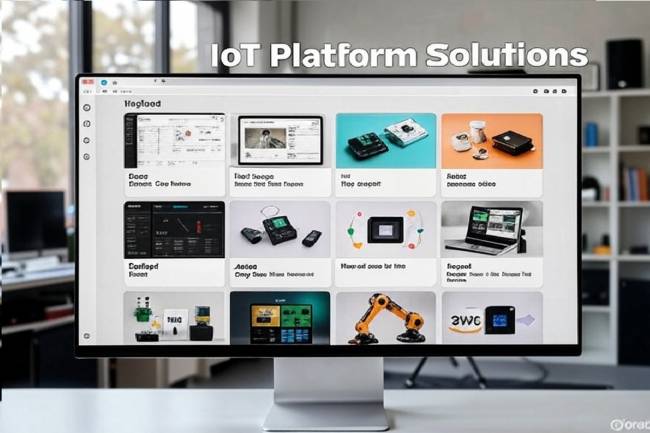
Top 10 IoT Cloud Platforms for ESP32, nRF, and STM32 Projects in 2025
Top 10 IoT cloud platforms tested in 2025 with real ESP32, nRF, and STM32 devices: free tiers, setup times, and performance comparison.
02.12.2025
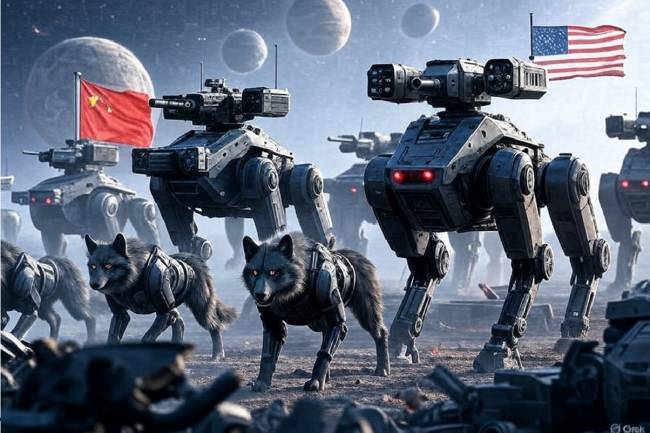
China’s Military Robot Army: The Game-Changer of 2025
China’s 2025 military robot wolves & humanoid combat bots tested in Taiwan drills: specs, costs, and comparison with Boston Dynamics, Ghost Robotics & more.
02.12.2025
Where is the limit of wearable technology?
The future of wearable technology
16.12.2022
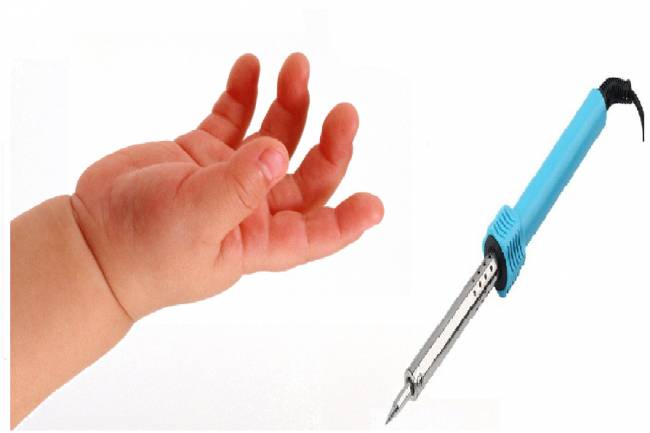
Why should we teach electronics to children?
Necessity of electronics and software training
25.12.2022
The impact of iOT in the agricultural industry
Use of new technologies in agriculture, IoT, Artificial Intelligence
17.01.2023