
19.May.2023
In this article, we will address a topic related to IoTs, whose popularity and prevalence is now unquestionable. We wanted to provide an entry-level guide for those who want to build IoT systems. First, let's look at the basics of IoT systems.
IoT platforms are a core component for internet of things (IoT) applications. IoT is a field of technology that allows physical devices to connect to the internet to collect data, communicate and work together. IoT platforms support important functions such as management of these devices, data collection, analysis, application development and integration. These platforms are gaining more and more importance as the number of devices contributing to the IoT ecosystem is rapidly increasing.
IoT platforms include various components. It consists of different components such as sensors to enable data collection and management, network protocols for data flow and communication, data analytics and artificial intelligence capabilities, user interfaces, and application development tools. These platforms require devices to connect securely to the internet, ensure data security, and support broad device management functions.
IoT platforms have wide applications in various industries. By using IoT platforms in areas such as industrial automation, energy management, smart cities, agriculture, health, transportation and home automation, efficiency can be increased, costs can be reduced and new business opportunities can be created. These platforms enable devices to communicate with each other and collect data at a central point, making it easier to make data-driven decisions and optimize processes. IoT platforms contribute to the rapidly evolving IoT ecosystem, supporting the emergence of next-generation applications and business models.
Platform Subscriptions: You can earn money by giving people, businesses or developers the opportunity to use your IoT platform. By offering different membership levels or plans, you can provide different features or services to users. You can offer a basic level of free plan and encourage upgrading to paid plans to access more advanced features.
Data Services: You can offer data services to process and analyze data from IoT devices and turn it into meaningful information for users. You can create subscription or usage-based pricing models for these services.
App Store: You can create an app store for your own IoT platform. By allowing developers to develop applications customized for your platform, you may receive a commission from the sale of applications.
Consulting and Customization: You can provide customized IoT solutions according to customers' needs. You can generate income by working on consulting services or special projects.
Hardware Sales: You can manufacture and sell your own IoT hardware devices. For example, you can develop hardware products such as sensors, controllers or connecting devices and integrate them with your platform.
Data Analytics and Marketing: By analyzing the IoT data you collect, you can provide trends, user behavior and marketing insights. You can generate income by selling this data to businesses or marketing companies.
Enterprise Collaborations: By partnering with businesses, you can find the opportunity to integrate your platform into their products and services or offer them IoT solutions. Such collaborations may result in revenue sharing or licensing agreements.
IoT platforms include many different server-side programs and services. The IoT-based jobs we mentioned above may require a professional teamwork. However, before we move on to a professional implementation step, we can also do an IoT-based trial run with a simpler approach.
Sensor and Device Selection
First, identify the sensors and devices you want to use. For example, you can choose a simple sensor such as a temperature sensor or a motion sensor. You can make the center of your project by choosing a small microcontroller or minicomputer like Arduino or Raspberry Pi.
Hardware Installation
Connect the sensor or device of your choice to the microcontroller or minicomputer. Make sure the sensor is properly connected and working. While doing this, you can proceed by using the documentation and sample projects of the platform you will use (such as Arduino or Raspberry Pi).
Data Collection and Communication
Read the data from the sensor and send it to a server or cloud service using communication protocols. You can use a simple HTTP POST request or an appropriate method such as the MQTT protocol. In this step, you may need to write the communication code using the appropriate libraries according to the programming language of the microcontroller and the platform you are using.
Data Storage and Processing
Store and process data on server or cloud service. You can store data in a structured way using a database management system (DBMS). For example, you can use popular databases like MySQL or MongoDB. You can use a suitable programming language (PHP, Node.js, Python, etc.) on the server side to process, analyze and present the data to the user when necessary.
User interface
Finally, create a UI where users can view and interact with sensor data. You can use a web-based interface or a mobile app. Design the user interface using web technologies such as HTML, CSS, and JavaScript, and create dynamic content using data from the server side.
Following these steps can set up a simple IoT platform. Data acquisition from the sensor, communication, data storage and processing, and the creation of the user interface include the basic components. Then you can extend this platform to your own personal applications.
You can also review other articles about IoTs:
Search: iot - Electronics World News (milivolt.news)
About Ümit Sönmez: Electronic-Computer Trainer, Author, Ümit Sönmez | LinkedIn
Energy Savings Will Be Achieved with 'Internet of Things'
Energy saving and sustainability with IoT! IoT technology provides companies with innovation in energy management
11.10.2023
Digital Flies Everywhere
What else could happen in a world with artificially intelligent flies and other animals?
24.04.2023

Writing Code to Artificial Intelligence
An attempt to write code with artificial intelligence; MQTT application
02.05.2023

Artificial Intelligence Revolution: Rapidly Changing Roles in the Business World and Adaptation to the New Era
The effects of Artificial Intelligence are rapidly emerging. Creating data and models is important for layoffs, industry transformations and adaptation to the new age.
13.01.2024
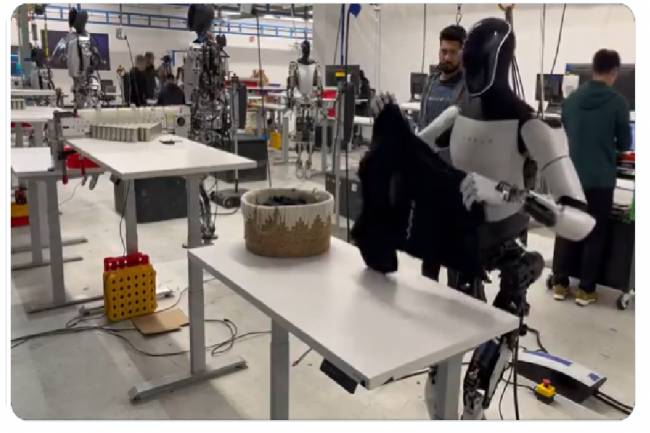
Tesla's New Robot: Takes on the Task of Folding Clothes
Tesla's Optimus Gen 2 robot draws attention with its ability to fold clothes. A look at the future of robotics with Elon Musk's sharing and artificial muscle technology
17.01.2024

New Developments from Neuralink
With Elon Musk's Neuralink project, it may be possible to control the mouse cursor thanks to implants inserted into the brain. Synapses and the brain-computer interface
21.02.2024

Artificial Intelligence and Electronics: From Unemployment Peril to Creative Business Opportunities
Artificial intelligence and electronics offer creative job opportunities for programmers to reduce the risk of unemployment. A detailed review with examples from agriculture, healthcare, finance and other sectors.
29.02.2024
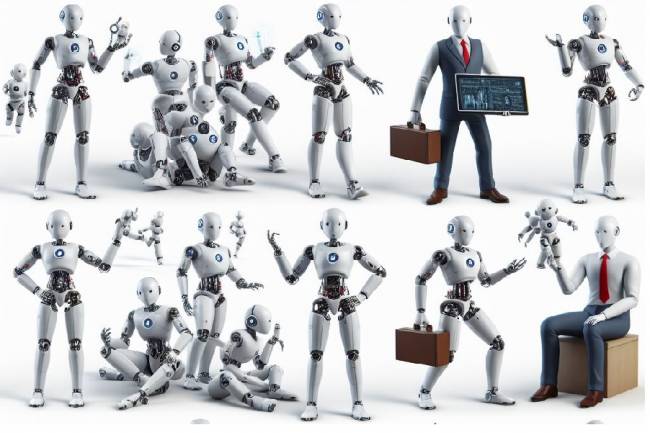
How humanized will humanoid robots become?
The development of humanoid robot technology and the fast movement ability of the Phoenix robot developed by Sanctuary AI. Hydraulic systems and future prospects
02.03.2024

Robotization of Humans - Are we one step closer to robotization?
In Education, we examine how mixed reality technology can be used to enhance the learning experience and present information in a more interactive way. In the business world, we discuss how mixed reality technology can deliver innovative solutions to companies and increase productivity by getting employees to receive real-time instructions while performing complex tasks more effectively.
20.06.2023

One day, an alien robot comes to town...
An article on the future role of artificial intelligence and robotics. The new artificial intelligence model developed by Google for garbage-collecting robots and the usability of different artificial intelligence models for various purposes are explained.
31.07.2023

X=Elon Musk
Discover the enigmatic symbol 'X' associated with Elon Musk - a visionary entrepreneur and innovator behind a wide range of groundbreaking projects such as SpaceX, Tesla, Neuralink, and more. Unravel the multifaceted meanings of 'X' as it represents unknowns, stoppages, and unlimited possibilities in the context of Elon Musk's global endeavors
01.08.2023
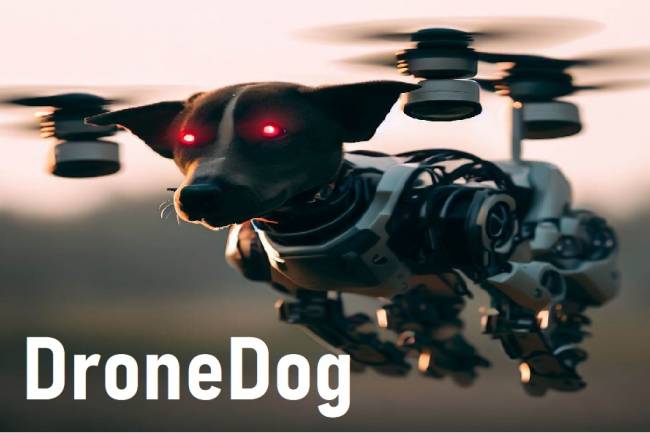
Drone Dog
In our article titled Drone Dog: What Happens When Adding Drone Feature to Robot Dogs?
16.08.2023

Security of IoT Systems: Bluetooth Modules and Threats
In the article focusing on the security of IoT systems and Bluetooth modules, threats and protection methods are discussed. Learn IoT security
20.09.2023
Security of IoT Devices with Wi-Fi Modules: Threats and Protection Methods
Security of IoT Devices with Wi-Fi Modules: Threats and Protection Methods. Learn the necessary precautions for IoT security.
22.09.2023

Robots of the Future: TeslaBot and K5 Security Robot
TeslaBot and the K5 security robot: The future of human-robot collaboration. The evolution of robotics and a new era for city security.
25.09.2023

The Rise of 5G Technology: New Professions and Business Opportunities
The spread of 5G technology creates new professions and business opportunities. Career tips on the transition from 5G to 4G and jobs of the future
28.09.2023
test
04.02.2026